Pусский



Что Вы ищете
?
Wavy Pleated Polishing Wheel - 6 Colors, Custom Sizes
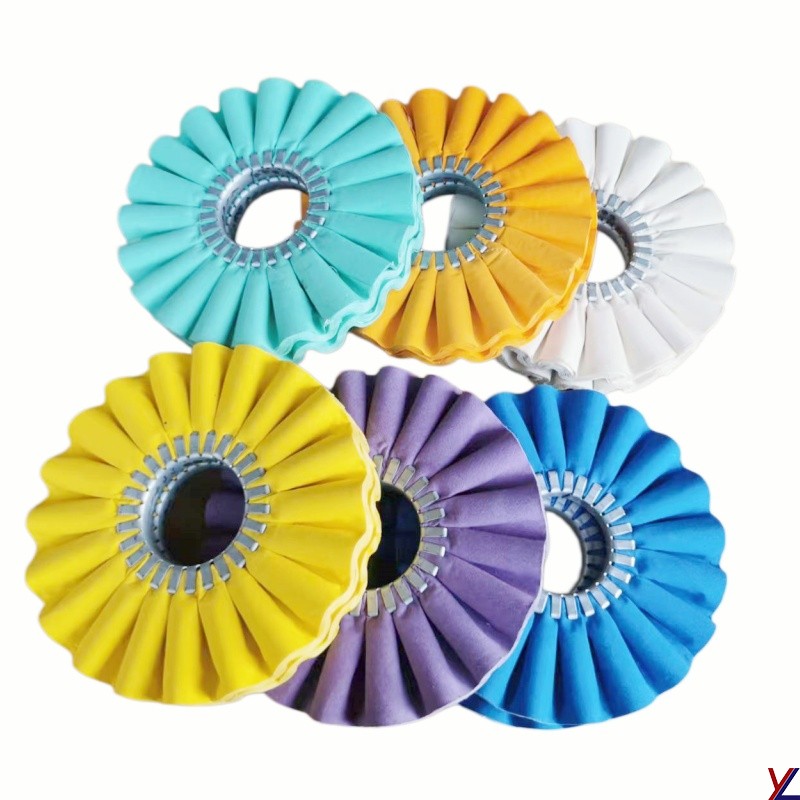
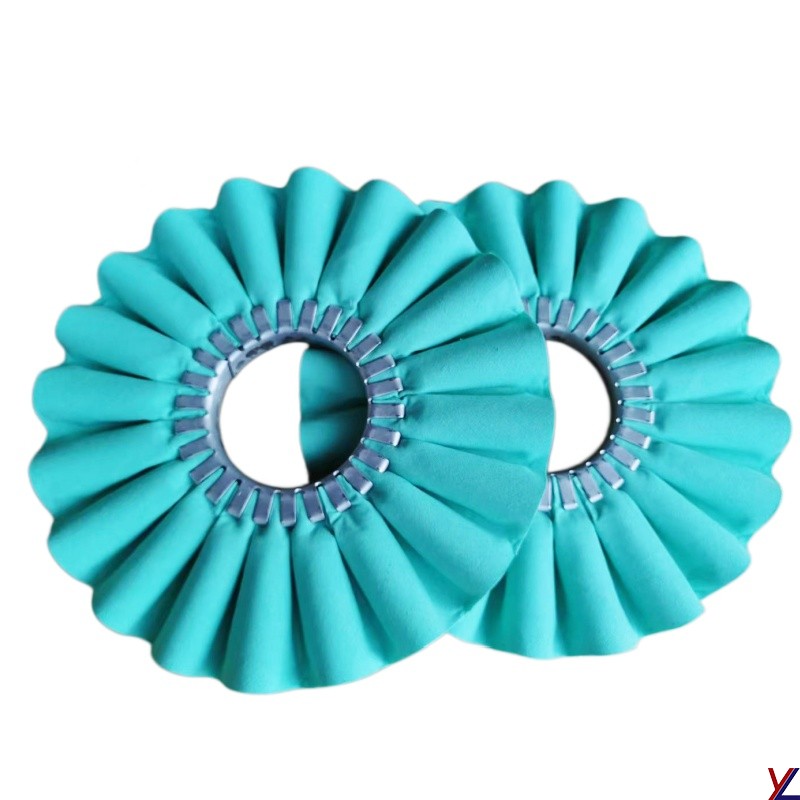
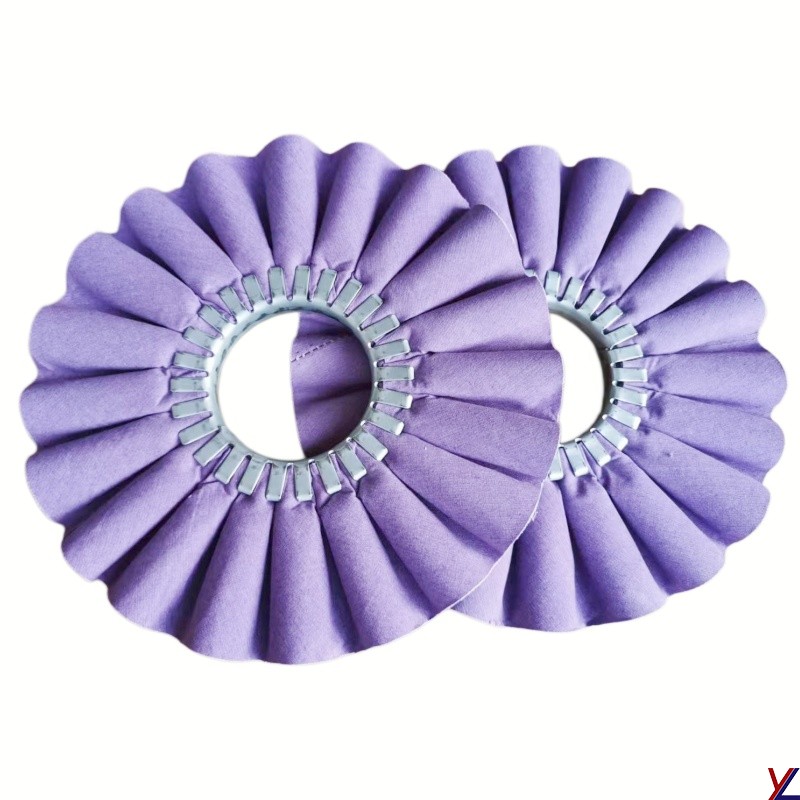
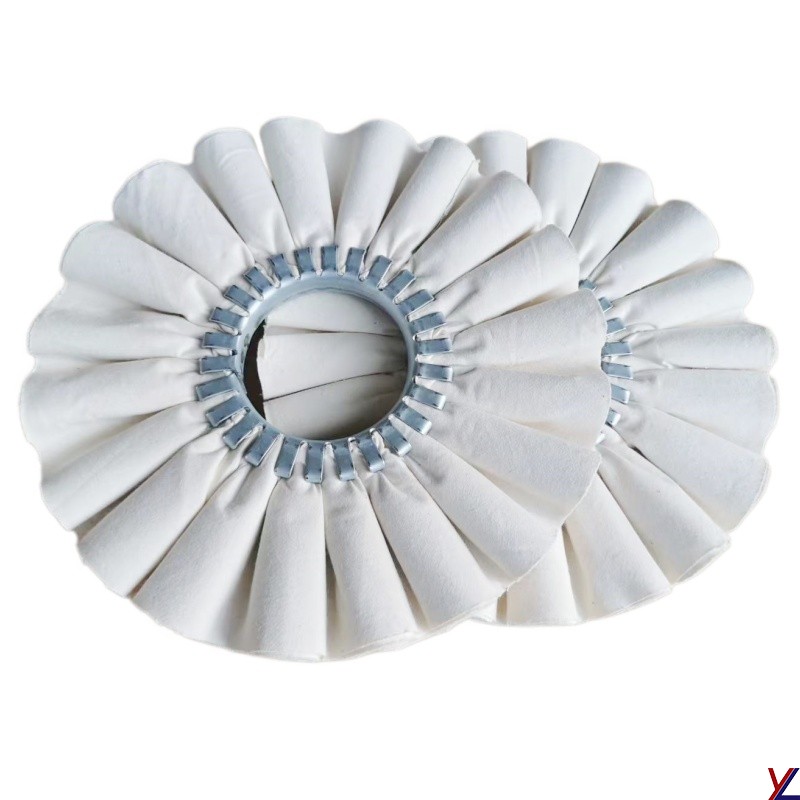
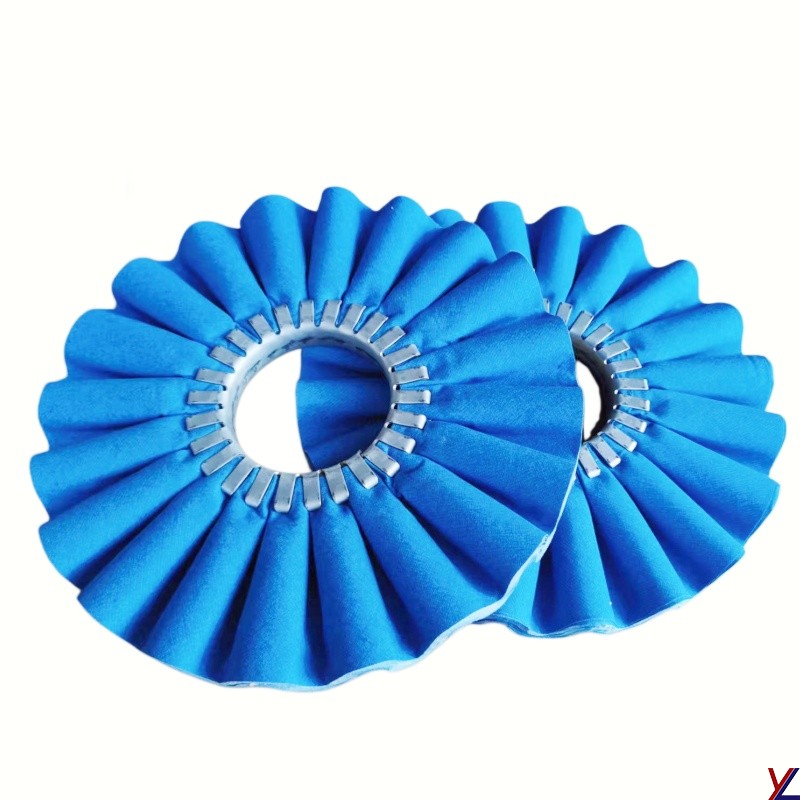
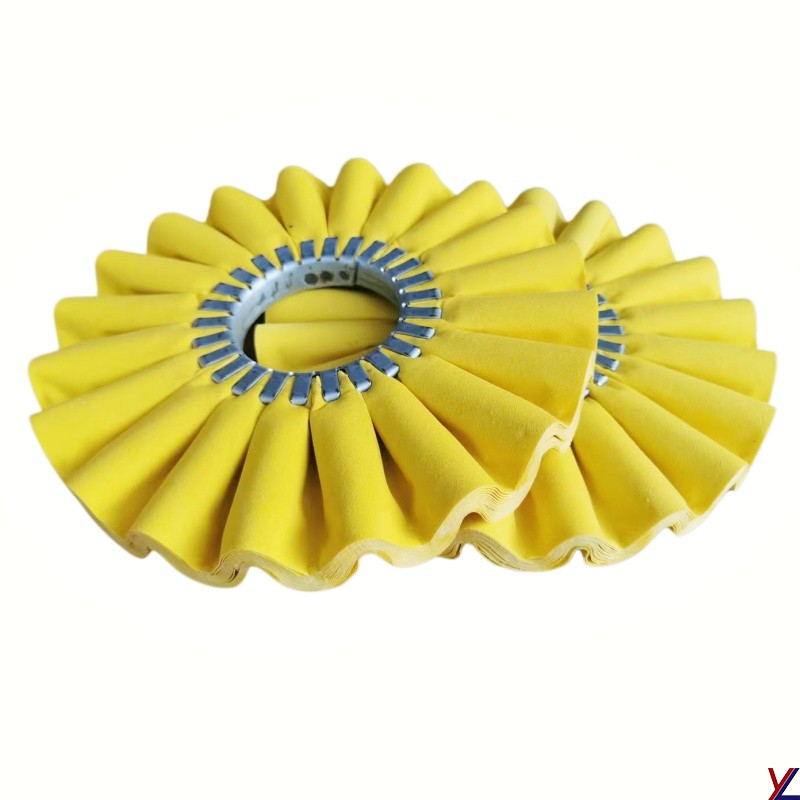
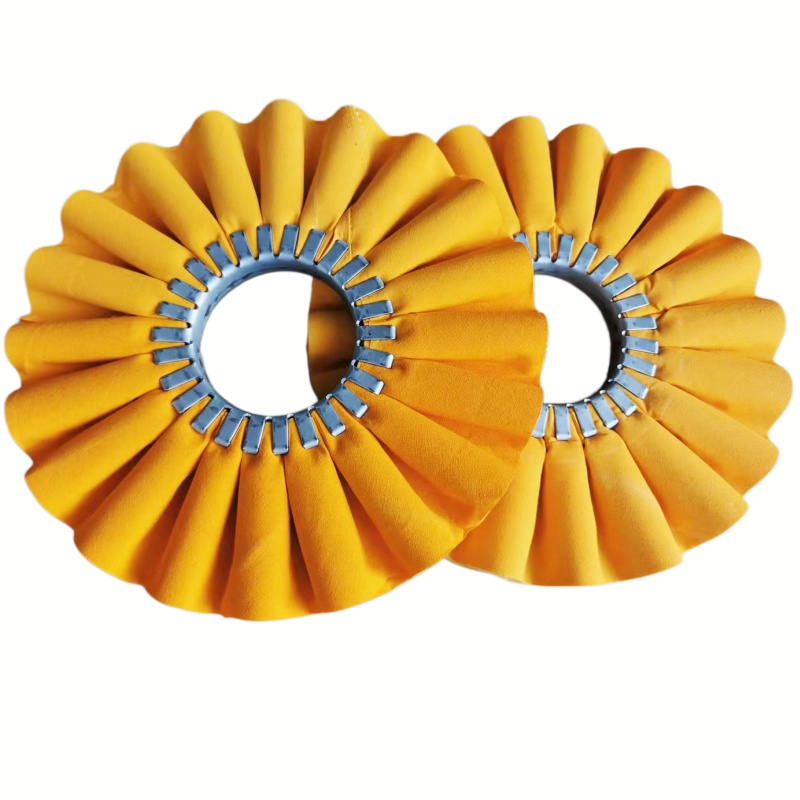
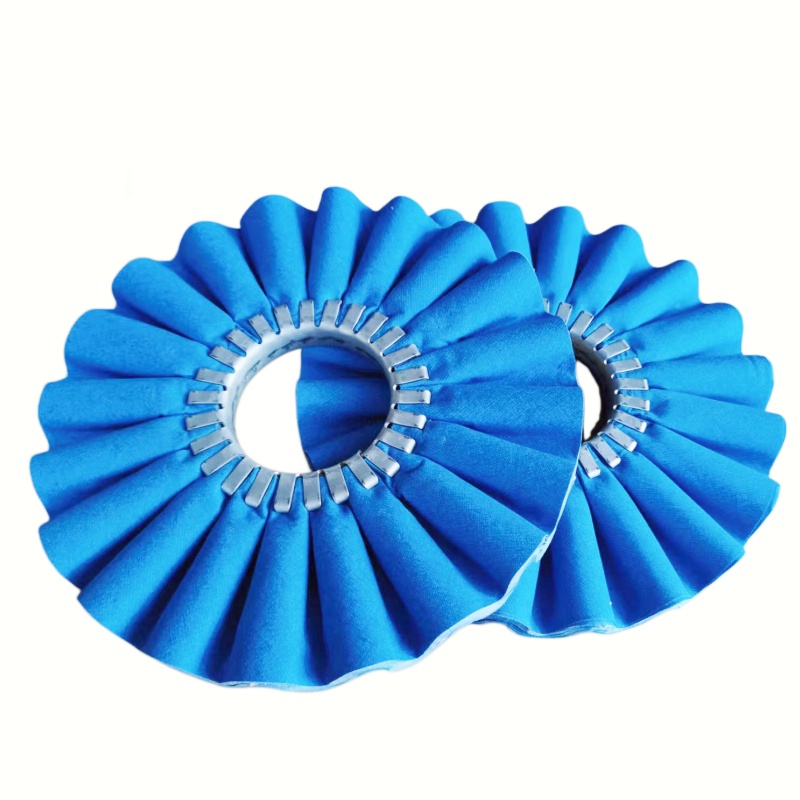
Our wavy pleated polishing wheel is made from 100% cotton cloth, stiffened, bias-cut and clamped around a steel centre plate so the layers form irregular folds that cut faster, run cooler and hold compound longer. Six colour-coded hardness levels, diameters from 8 to 14 inch, 12-26 layers, custom bores and private-label packing.
бренд :
YOL
Product Name: Wavy Pleated Polishing Wheel
A wavy pleated polishing wheel is a bias-cut cotton cloth wheel clamped around a steel centre plate, with the cloth layers splayed open into irregular folds instead of being sewn flat. The folds give the wheel three things a flat buff cannot offer: each yarn meets the workpiece with its cut edge, the pack moves air as it spins, and polishing compound stays in the valleys between layers instead of flying off the rim. Every dimensional parameter is made to order — outside diameter, layer count, centre plate, bore, pleat depth and packing — so the wheel can be matched to a specific machine, material and finish rather than to a catalogue number.
Applications:
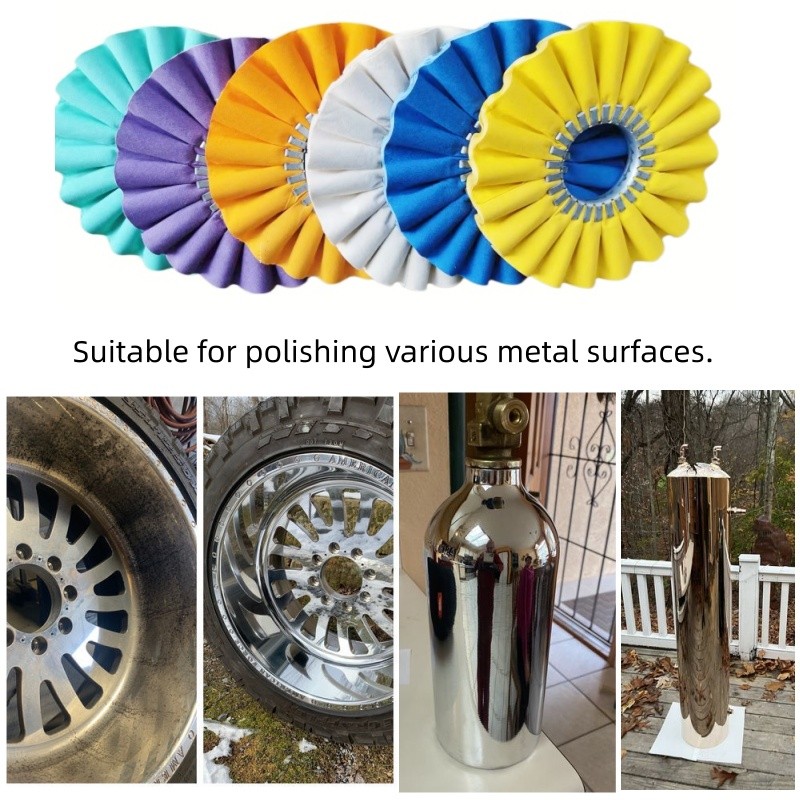
Used for polishing and grinding the surfaces of stainless steel, aluminium, zinc alloy, copper, brass, titanium, plastic, wood and painted surfaces. The six colour grades cover the full sequence from heavy cutting to final colour, so a single order can carry a complete polishing line. Common mounting arrangements are manual polishing lathes, fixed and oscillating automatic polishing machines, edge grinding lines and robotic finishing cells.
The Fabric and the Folds:
1. The base material is 100% pure cotton cloth, chosen for consistent yarn thickness rather than the cheapest available greige cloth. Yarn consistency is what makes the layer count repeatable from one shipment to the next.
2. The cloth is stiffened with sizing before cutting. Sizing is what gives the pleat its memory: an unsized cloth collapses into the gap between the plate and the workpiece the moment the wheel warms up, and the wheel stops cutting.
3. The stiffened cloth is cut on the bias, not straight across the roll. Bias cutting means the yarns run diagonally across each layer, so the fold opens into a soft edge rather than a hard corner, and the wheel conforms to curved and contoured parts.
4. The layers are clamped between steel centre plates and splayed into irregular folds. During rotation each fold acts as a small fan blade, pulling air through the pack and across the contact zone. This airflow is the reason a pleated wheel can run dry on stainless steel where a tight sewn wheel of the same hardness scorches the surface.
5. Polishing wax lodges in the valleys between the pleats and is released gradually as the fold wears back. The wheel therefore keeps working longer between applications, which matters on long runs and on automatic lines where an operator is not standing next to the head.
Standard Sizes and Custom Range:
6. Outside diameter: 8 inch, 10 inch, 12 inch and 14 inch are standard. Other diameters are made to order, including metric sizes for machines built to 400 mm or 430 mm drawing standards.
7. Fabric layers: 16 layers is the standard pack. Thicker packs are available up to 26 layers. The limit is not arbitrary — beyond 26 layers the centre plate can no longer clamp the outer layers evenly, and the outer edge starts to flare and throw cloth at working speed.
8. Centre plate: usually 3 inch, 5 inch or 7 inch. Larger diameters take a larger plate and smaller diameters a smaller plate. The plate size has to be stated separately from the diameter, because a 14 inch wheel with a 7 inch plate and a 14 inch wheel with a 3 inch plate behave like two different wheels: the small plate leaves a longer, more flexible working face.
9. Centre bore: 16 mm, 20 mm, 25 mm, 30 mm and 50 mm are standard, and other bores are made to order according to the spindle of the machine the wheel will be mounted on. A bore that is 1 mm undersize cannot be corrected on site, so the spindle diameter should be measured rather than assumed.
10. Pleat depth and pleat count can be adjusted. A deeper, more open pleat runs cooler and holds more compound; a shallower, denser pleat gives a tighter, more aggressive contact and a more uniform scratch pattern.
11. Packing and labelling are made to order for private label programmes — printed cartons, colour-coded labels, barcodes, part numbers and poly wrapping to the buyer's artwork.
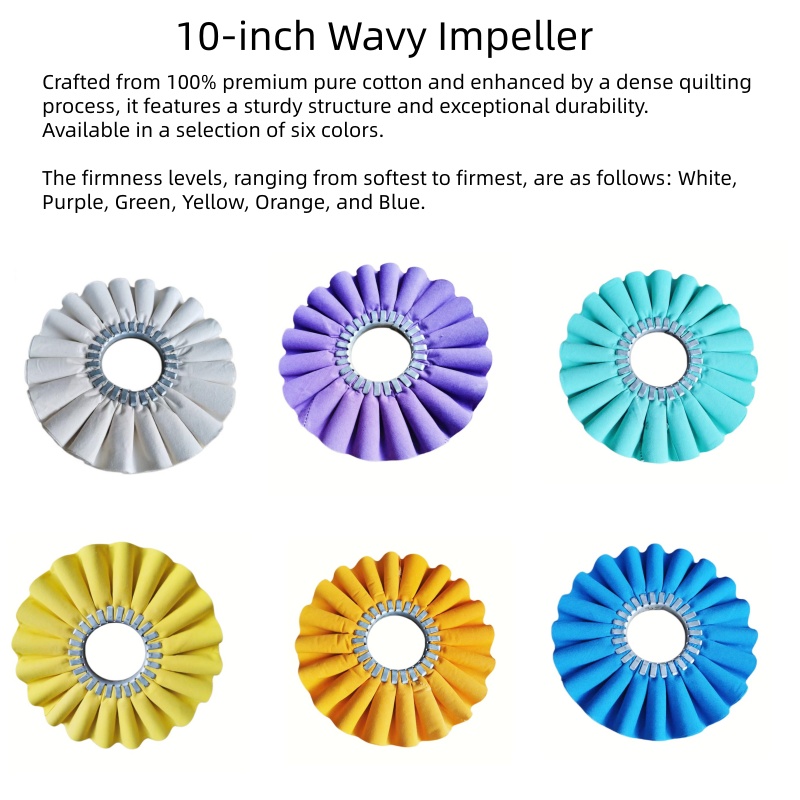
Six Colour Grades, Softest to Hardest:
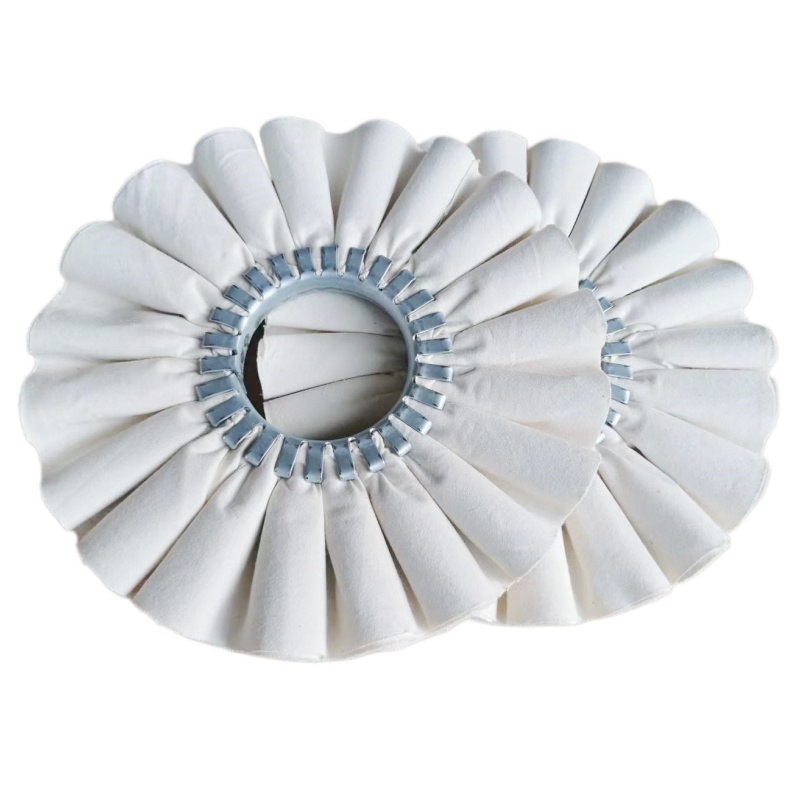
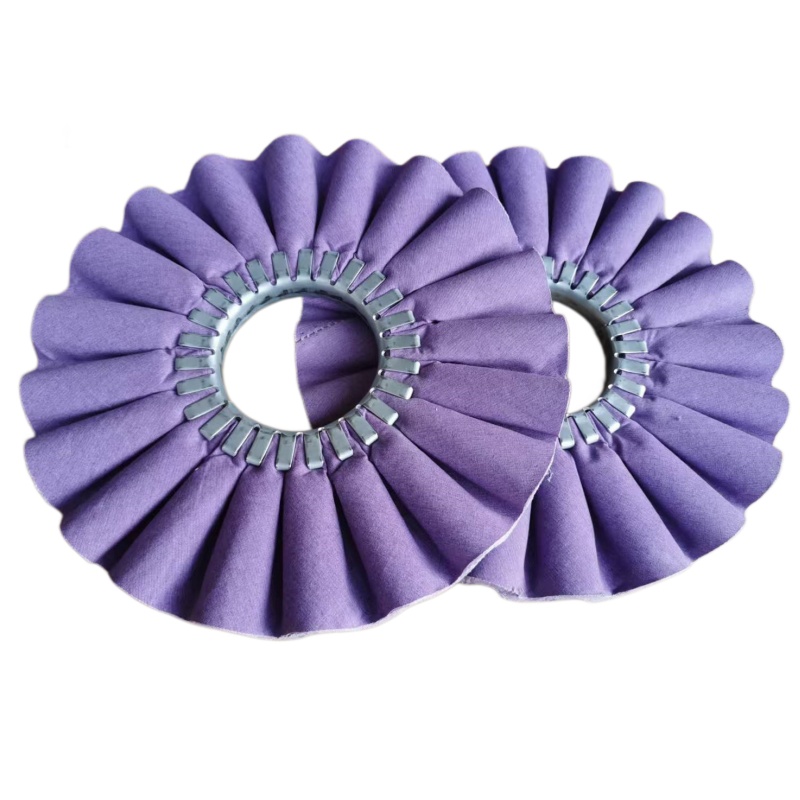
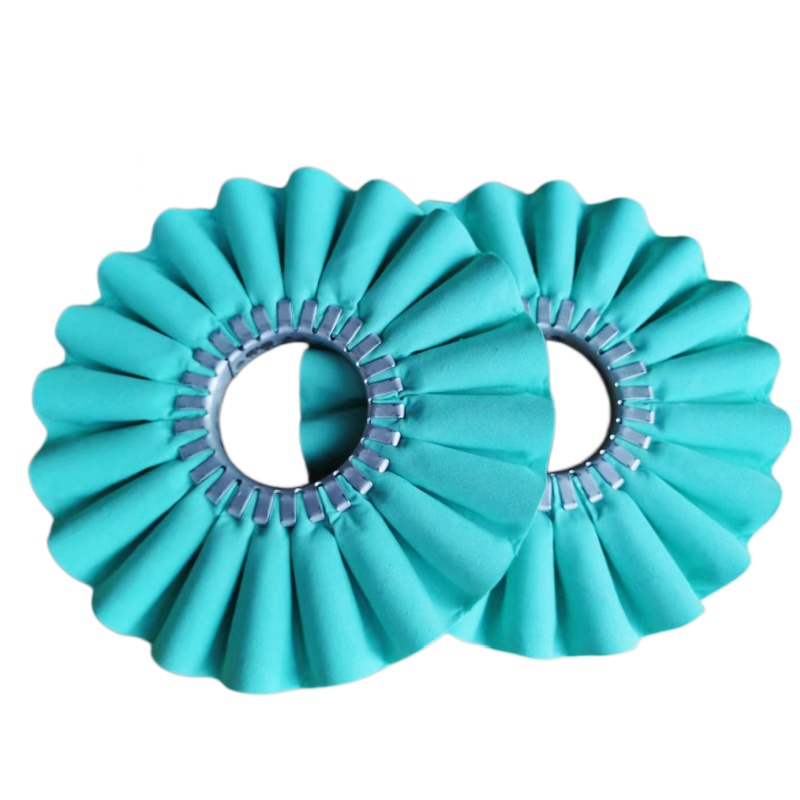
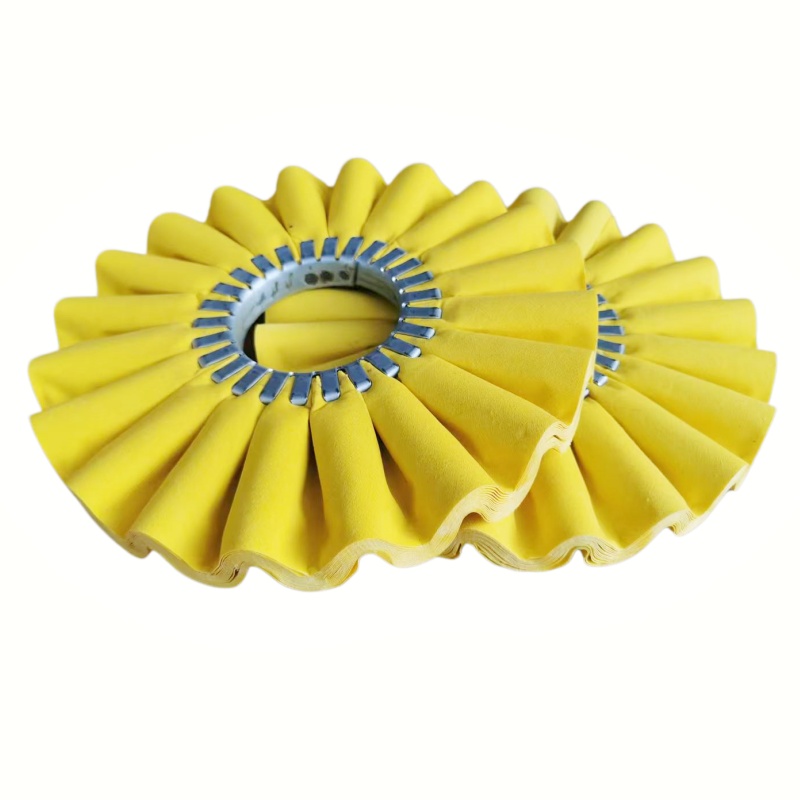
Colour is a property of the treated cloth, not a dye applied afterwards. White is the softest and blue the hardest. Harder cloth cuts faster and lasts longer; softer cloth gives a finer finish and conforms better to shape. A polishing sequence therefore runs from the hardest grade the surface will tolerate down to the softest grade that produces the required finish.
Speed: Match the Wheel to the Spindle:
12. Surface speed is what does the work, not spindle rpm. The relationship is surface speed in SFPM = 3.14 × diameter in inches × rpm ÷ 12. A 14 inch wheel turning at 2,400 rpm reaches about 8,800 SFPM, which is already at the upper end of the working band for cotton cloth. Fitting a larger wheel to a spindle in order to get more cutting force therefore does not work: the larger wheel simply runs too fast and burns the cloth.
13. The practical band for pleated cotton wheels is roughly 4,500 to 8,500 SFPM. Below that the pleats do not generate enough airflow and compound smears instead of breaking down; above it the cloth glazes and the finish turns patchy.
Before You Request a Quotation:
14. Send the outside diameter, or the maximum diameter that fits the machine guard without fouling the workpiece.
15. Send the spindle or shaft diameter for the bore, measured rather than taken from a manual. State whether the bore needs a keyway or a threaded insert.
16. State the layer count, or the required wheel width. Width and layer count are the same decision seen from two directions.
17. Name the material and the operation — for example, 304 stainless sheet, 180 grit prior scratch, target mirror finish. The colour grade follows from that, and a trial in two grades is usually cheaper than guessing.
18. Say whether the wheels go to a manual lathe, an automatic line or a robot. Automatic and robotic stations are sensitive to wheel-to-wheel variation in diameter and balance, and the pleat depth is set accordingly.
19. For private label orders, send the artwork, the label layout and the carton quantity per size. Sampling before a first production run is normal practice and is quoted separately from the bulk order.
Note:
This is a standard wavy pleated cloth wheel. Different pleat depths and pleat counts produce different airflow and different surface textures during polishing, so non-standard pleating is also made to order. Wheels are supplied unbranded unless private label packing is specified.

Наши профессиональные полировальные круги из пропиточной ткани изготовлены из специально обработанной пропиточной ткани, обеспечивающей высокую скорость резки и превосходные полировальные характеристики. Доступны в различных цветах, включая ярко-оранжевый, синий, желтый, белый, зеленый и фиолетовый, каждый цвет имеет разную твердость. Это гарантирует неизменно высокое качество полировки металлических поверхностей. Прочные, эффективные и практичные, эти полировальные круги из пропиточной ткани идеально подходят для точной полировки и финишной обработки, а также являются надежным выбором для промышленной полировки.
ПодробностиОставить сообщение
Отсканируйте QR-код для отправки в WeChat :

Отсканируйте в WhatsApp :